How Words make Worlds
“About holding conversations that stretch us, instead of seeking to resolve every tension”
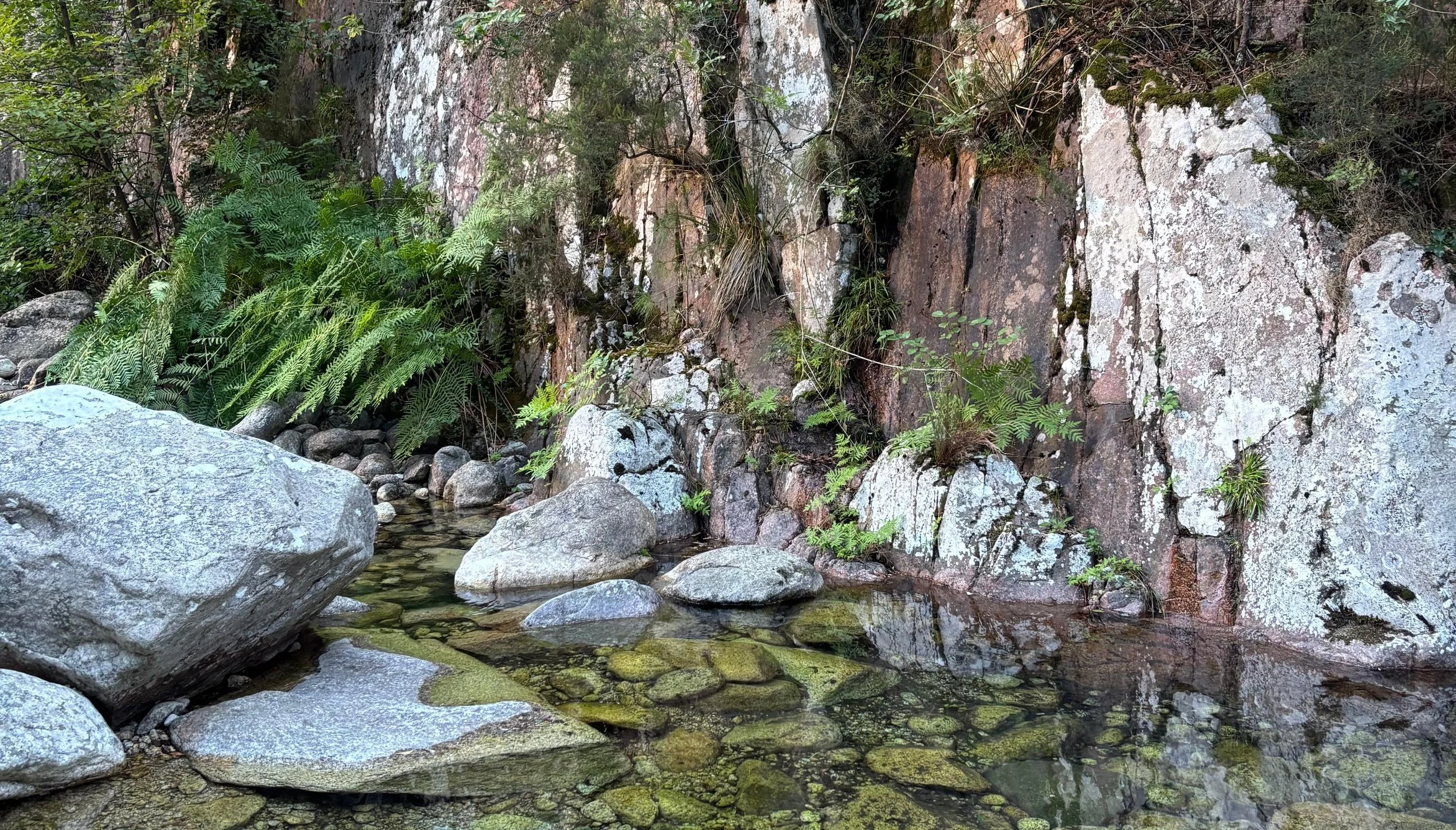
The sun had just risen when I parked my scooter by the riverbank. I had woken early to watch the world unfold in the first light, to see and feel how life slowly shifts with the passage from night to day. The air felt fresh on my face, and a little breeze moved across the surface of the water. Birds were beginning to sing. For a long while I just stood there and watched, how the current kept shifting the reflection of the sky, how the same water could look grey, then silver, and then almost gold.
A fisherman stood a little downstream, pulling in his net. When I asked what he was catching, he chuckled and said,
“Whatever the river offers.”
I nodded, assuming it was just a humble way of saying not much today. But as I listened to him speak about the river – its moods, its timing, the way the fish “choose” to appear – I realised his words carried a different logic altogether. What I called fishing, he experienced as relationship. We were talking about the same gesture, the same water, but they were held in different worlds of meaning.
That moment stayed with me – the realization that the difference between what we see and what we know often lies in the words we choose. What looks like one thing from afar can, through another language, become something else entirely. Our knowledge doesn’t float above language; it grows from it. Every act of naming shapes what we come to see as real.
We like to think of knowledge as something solid – something we can hold, like a smooth stone in the palm of our hand. That solidity brings comfort: if the world is stable and objective, then we can measure it, name it, know it for sure. This is the legacy of modernism; knowledge as representation, language as a mirror held up to reality.
But what if language doesn’t mirror the world? What if it creates it? Allow me to explain.
Imagine walking into a forest. It smells like rain, and the light filters through the canopy, shifting and alive. Beneath your feet, the soil breathes.
Now imagine describing this forest in four different ways. You could call it a carbon sink. You could call it a resource. You could call it a home. Or you could call it a sacred ancestor. Each of these words opens a different world. A “resource” invites extraction and use, a “home” invites care and belonging, a “sacred ancestor” invites reverence. The forest itself hasn’t changed, but the relationship has.
Words don’t merely point at the world; they shape how we live within it. A single shift in language can ripple through entire systems of action. When hospitals began using the word patient instead of referring to someone as a sick body, it subtly changed how care was given, now emphasizing a person to care for, not just an illness to treat. When rivers in Aotearoa New Zealand were legally recognized as persons, new forms of responsibility and guardianship emerged.
Language, it turns out, is never neutral. Words are invitations to act in particular ways.
What I describe above is a brief introduction into what is called “social construction”. Social construction doesn’t deny that a reality exists, but is does reframe how we come to know it. It emphasizes that the world as we know it is not born in isolation but in the spaces between us; in our conversations, conflicts, rituals, and stories.
To say that knowledge is “socially constructed” means that what counts as real depends on the relationships through which we make sense of things. A scientific model, a myth, a law – each is a shared way of agreeing on what matters and what is ‘true’. Reality, in this sense, is not a solitary discovery but a collective creation.
Philosopher Donna Haraway once wrote, “It matters what stories make worlds, what worlds make stories.” The stories we tell do not simply reflect reality; they participate in shaping it.
Every narrative carries an ethic, a direction of care, a sense of what is possible. This means that the worlds we inhabit are not simply found; they are told into being.
As I mentioned earlier, for centuries, Western thought imagined language as a mirror – an instrument meant to reflect reality as it truly is. But a mirror can only reproduce what already exists. To imagine otherwise, we must see language not as reflection but as relationship – as a creative movement between self and world.
When we speak, we don’t simply describe what we see; we create openings, orientations, and pathways. A new word can reorient an entire worldview. Think of Anthropocene, biodiversity, planetary health. These words didn’t exist in everyday language until recently, but once they entered it, they rearranged our moral and emotional landscapes. Anthropocene makes us see human activity as a force of geological change. Biodiversity makes us aware of the richness of life’s interdependence. Planetary health reminds us that the well-being of humans and ecosystems cannot be separated.
Even our questions carry worlds within them. To ask, “How can we manage the planet?” assumes that we stand apart from the world, as managers of a resource. To ask, “How can we live well with the planet?” invites partnership, humility, and reciprocity.
In this sense, language is a form of ethics. It directs our attention, frames what feels possible, and shapes how we care.
If knowledge lives in relationship, it also carries responsibility. Every way of describing the world illuminates some things while dimming others. The ideal of objectivity – so often held up as the highest virtue in knowing – can itself become an ethical stance that privileges distance over intimacy, and control over connection.
To call some viewpoint neutral is often to ignore the conditions that made it appear so. Acknowledging that knowledge is social doesn’t mean giving up on truth; it means taking responsibility for how we arrive at it.
As philosopher Lorraine Code wrote, “knowing well is a moral matter.”
If knowledge is born between us, then it must be accountable to those relationships – to the people, places, and more-than-human beings our knowing touches. In practice, this means being mindful of who or what is excluded by the way we frame a problem, and who or what is uplifted by it.
If knowledge is always relational and situated, then there can never be a single, absolute world that everyone agrees upon. There are many worlds, overlapping and entangled, each whispering through the others. In one culture or cosmovision, a river may be understood as a person – an ancestor with rights and agency. In another, that same river is a natural resource, a source of energy or irrigation. In another still, it becomes a border – a line separating us from them.
None of these interpretations are wrong. Each emerges from a web of relationships that give the river its meaning in that context. Each story offers a way of navigating what is true and real for those who hold it. Rather than asking which perspective is correct, social constructionism invites us to ask how these different worlds might coexist. How can we live in dialogue among multiple realities, multiple worlds, without erasing their differences?
The psychologist William James called this plurality of truths a pluriverse; a world made of many worlds. The goal of a pluriversal outlook is not to collapse difference into sameness, but to cultivate the art of living between worlds: to listen to another reality without needing to ‘own’ it, to understand another story without needing to translate it to something that’s yours. (I’ll publish a piece about this idea soon).
In practice, this means holding conversations that stretch us instead of seeking to resolve every tension. It means recognizing that no single framework – whether scientific, spiritual, or economic – can contain the whole of truth. Truth, in this sense, is not a monument we all must worship, but a meeting place; a dynamic space where different understandings encounter and transform each other.
Talking about multiple truths can feel unsettling. Some fear that if reality is made in conversation, we are left floating in a sea of opinions. But social constructionism is not about relativism or denial. It is, above all, about creativity and care.
To realize that our truths are made is not to declare them meaningless, but it is to recognize our capacity to make them differently. It opens a door to imagination and responsibility. Once we understand that meaning is a living process, we can shape it with greater care and intention.
Philosopher Isabelle Stengers calls this the art of paying attention. Attention, in this sense, is participation; a way of letting the world speak back to us, of being surprised and changed by what we hear. Constructionism, then, is not an escape from reality but a deeper engagement with it. It invites us to be co-creators rather than distant observers, to make our ways of knowing more just, more curious, more alive to possibility.
Reading about social construction, I began to see the world not as a fixed backdrop but as a living conversation. Every word we speak, every gesture we make, is an act of world-building; it participates in shaping what becomes real for us and for others.
If that’s true, then we are all world-builders, whether we realize it or not. The question is: What kinds of worlds are we creating with our words? Do they deepen connection, or sharpen division? Do they invite wonder, or enforce indifference? Do they open space for other forms of life to breathe, or do they crowd them out?
In an age of ecological unraveling and social fracture, these are not abstract questions. The crises we face are not only material – they are imaginative. They are rooted in the stories we tell about who we are and what the world is for.
If knowledge is born between us, perhaps healing begins there too – in the small but profound acts of reimagining how we speak, how we listen, and how we live together.
Social psychologist Kenneth Gergen wrote, “We are suspended in a ceaseless process of making meaning together.”
I think of that line often. It reminds me that reality is not static, but alive – a shifting web of relations that changes with every conversation. Maybe truth is not something we possess once and for all, but something we tend to, like a garden that grows through love, attention and diversity.
To live with that awareness is to live more gently. It has learned me to speak while knowing that our words are never neutral, and to listen as if the world itself were listening through me.
We do not stand apart from the world, observing from a distance. We breathe it in, shape it, and are shaped by it in return.
Perhaps that is what social constructionism ultimately teaches: that to know is to relate, to speak is to create, and to live is to participate in the ongoing making of the world.
The invitation, then, is not to master reality – but to meet it, again and again, in conversation.